Today: Cam Coleman portals, Chambliss vs. Stockton, Jeremiah Smith's admission, and the key to winning. |
|
|
 | ~9.5 minute read (2,065 words) | | |
|
|
Cam Coleman becomes the new No. 1 player in the Transfer Portal |
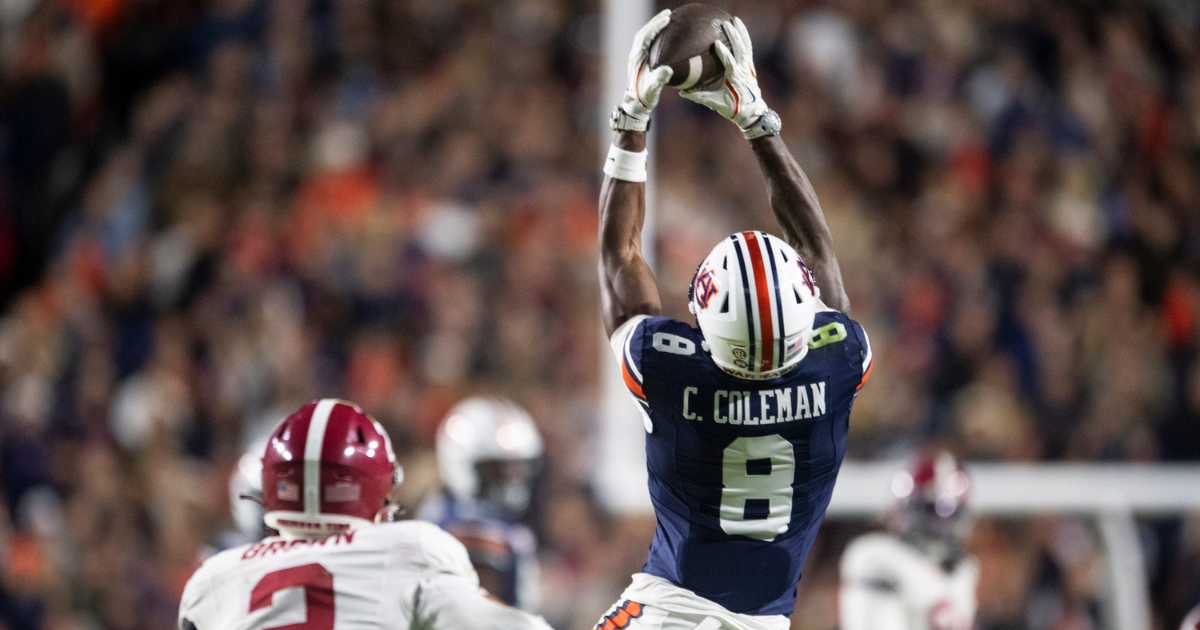
Auburn receiver Cam Coleman might already be a household name if circumstances had broken slightly differently. A former five-star prospect in the 2024 class from Phenix City (Ala.) Central, Coleman entered college alongside Ohio State's Jeremiah Smith and Alabama's Ryan Williams, two receivers who became immediate stars as true freshmen at national powers. With so much attention focused on those programs, there wasn't much spotlight left for anyone else. Coleman chose a different route, staying in-state to sign with Auburn. Over his first two seasons on The Plains, the Tigers struggled to establish stability at quarterback under Hugh Freeze, cycling through options and producing inconsistent offensive results. That dysfunction ultimately cost Freeze his job and limited Coleman's national profile. So Monday's news was hardly shocking. Coleman is expected to enter the transfer portal, and while he hasn't generated the same headlines as Smith or Williams, he may be the most important non-quarterback transfer to hit the market so far. He's already ranked No. 1 in On3's rankings of the top transfer portal players. Coleman has the ability to change a program's trajectory immediately. He is expected to command a seven-figure NIL deal, and Pete Nakos has the intel on schools to watch in his recruitment. If there's any question about his ability, one short sequence from Auburn's 45-38 loss to Vanderbilt on Nov. 8 provides the answer. First came the touchdown. Coleman ran a fly route and hauled in a 23-yard pass one-handed in the end zone, tracking the ball despite his vision being obstructed by the defender. Less than six minutes later, Auburn needed a two-point conversion to tie the game. The Tigers again went to Coleman on a fade along the boundary, and again he extended one arm and secured the catch. The flashes were undeniable. Coleman is a star who simply hasn't fully risen yet. In an era where dynamic receivers are nearly a prerequisite for championship contention, Coleman is a rare asset. Across two seasons at Auburn, he totaled 1,306 receiving yards and 13 touchdowns. While Auburn invested heavily in him, this move appears to be about more than money. This feels like self-preservation as much as business, a decision to chase wins and relevance during his final season rather than join another rebuild. Auburn's recent hire of Alex Golesh may not have been enough to change that calculus. Maybe he'll go play with Arch Manning at Texas. Maybe he'll go play with Marcel Reed at Texas A&M. Maybe it'll be somewhere else. But regardless of where it is, you can certainly bank on it being a team with a competent offense, a returning quarterback, and a program that expects to contend for next year's national title. Coleman may not be a star in college football yet, but make no mistake: he is a star. He's one decision away from finishing his career next to Smith, which is where he stood when he began his college football career. Read the full column from Ari Wasserman. |
|
|
A high-profile QB showdown few predicted back in August: Trinidad Chambliss vs. Gunner Stockton |
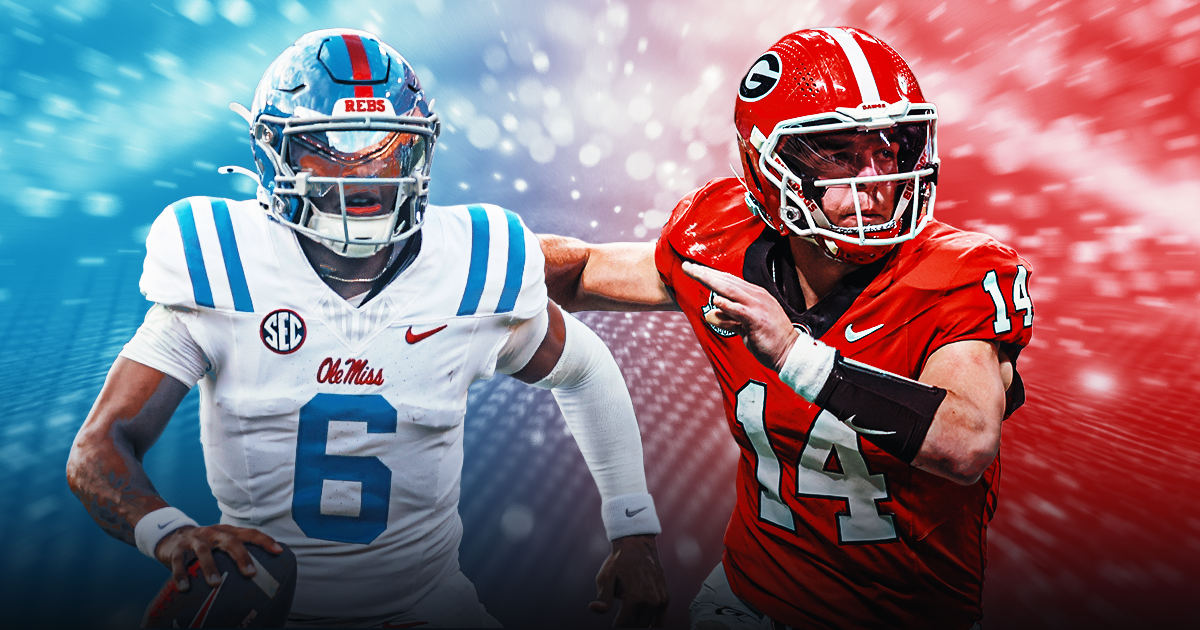
Editor's note: The following is an excerpt from a longer feature by Chris Low. Trinidad Chambliss and Gunner Stockton weren't even supposed to be here. Not with these teams, not in this setting and certainly not players who garnered Heisman Trophy consideration. And, yet, here they are in the Big Easy preparing to lead their teams against each other in Thursday's Allstate Sugar Bowl for the right to go to the College Football Playoff semifinals. "It's been crazy, honestly," said Chambliss, who started the season as Ole Miss' backup quarterback after spending his first four years at Division II Ferris State, where he didn't see any game action his first two years. "Sometimes I've got to pinch myself and realize, 'Dude, you're at Ole Miss. You're playing in the SEC and now I'm at the Sugar Bowl.' I never really thought I'd get to this point, to be honest. I did have some doubt at Ferris State if football was really for me. So this is really cool, and I give thanks to God." Stockton was a four-star prospect at Rabun County High in the northeastern corner of Georgia's Blue Ridge Mountains. He was all set to go play at South Carolina as a rising junior in high school and committed to the Gamecocks. But when Will Muschamp was fired as South Carolina's coach at the end of the 2020 season and offensive coordinator Mike Bobo left to take a job at Auburn soon afterward, Stockton decommitted and eventually signed with Georgia. "I mean, at the end of the day, you've got to go out there and play, and it's crazy how everybody's paths are a little different," said Stockton, a redshirt junior who had started in just one game entering this season. "You follow the path the Lord sets for you, and mine led right where it was supposed to lead." Divine intervention or not, Chambliss and Stockton have been mirrors of each other in a lot of ways. They've been the centerpieces of their respective offenses with the ability to pass and run. They got their shots as the starter thanks to injuries to other players, and they've galvanized their teams with their toughness, team-first mentality and penchant for making clutch plays when their teams have needed it most. Along the way, each finished in the top 10 of the Heisman Trophy voting this season. Good luck in finding either player anywhere near the Heisman Trophy watch lists back in August. Arch Manning was there. So were Garrett Nussmeier, LaNorris Sellers and DJ Lagway among SEC quarterbacks. But Chambliss and Stockton? "I don't think anyone had that on their bingo card," Chambliss said. "And if you would have said that about me before the season, I would've just laughed at you." Read the full story from Chris Low. |
|
|
The impact of Jeremiah Smith's recruiting decision on Ohio State and Miami |
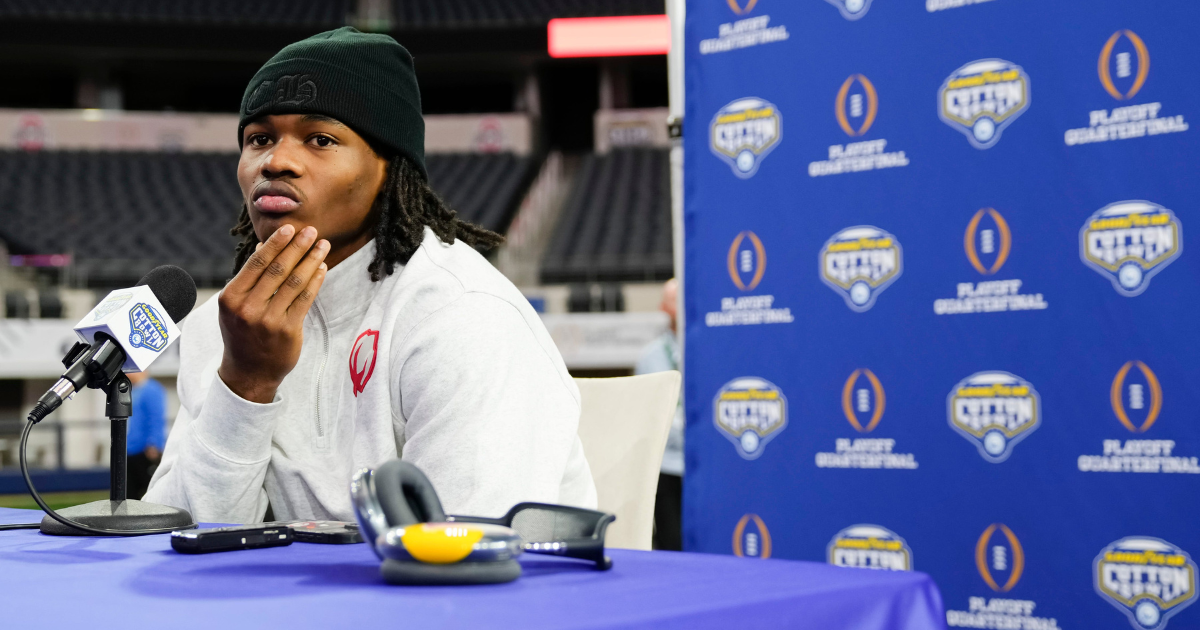
Jeremiah Smith sat at one of the breakout tables near the end zone on Monday at AT&T Stadium during Cotton Bowl Media Day, with Ohio State and Miami logos flashing on the video boards behind him. It was a fitting backdrop for one of the College Football Playoff quarterfinal's most compelling storylines. Three years ago, that scene might have suggested Smith was representing the hometown program. The former five-star prospect from Hollywood (Fla.) Chaminade-Madonna Prep staying home to help elevate Miami back to national relevance would have made perfect sense. Instead, Smith is a Buckeye. Now one of the best receivers in college football, Smith helped lead Ohio State to a national title as a true freshman and is back on the sport's biggest stage with a chance to repeat. He could be the No. 1 overall pick in the NFL Draft after next season. And as this matchup approaches, it is fair to wonder whether any recent recruiting decision has had more impact on two programs than Smith choosing Ohio State over Miami. When asked whether he thought he would be a Hurricane had Miami been playing in games like this during his youth, Smith did not hesitate. "Most likely, yeah," Smith said. "I probably would have ended up going to Miami if things were on the right track then and there. But I chose to stick with Ohio State." That admission stings for Miami fans. Because programs turn around when elite players arrive. Had Smith chosen to be the catalyst, there is a strong argument that Miami would have been a CFP team last season. Adding Smith to an offense that already featured Cam Ward, Jacolby George, and Xavier Restrepo could have produced one of the most explosive units college football has seen. Ohio State might still be favored on Wednesday, but likely not by double digits if Smith were on the other sideline. Ohio State coach Ryan Day was asked to consider that hypothetical. He laughed it off. "I know you like to play the hypothetical game," Day said. "I don't really do that. I'm just glad he's on our team." Smith is a generational talent, a term often overused but tough to dispute here. At 6-foot-3, 225 pounds, he looked NFL-ready as a true freshman. From a business standpoint, Ohio State was the safe choice. The Buckeyes routinely turn five-star receivers into first-round picks, and Smith did not need to gamble with his future. Smith acknowledged the difficulty of that decision. "That night I had some thoughts about it," he said. "Then I woke up in the morning and had some really good thoughts about it. After I took a midterm exam, my agent called my dad. I had some tough conversations with my dad, uncle, and agent. They felt the best decision for me was to go to Ohio State. That's what I went with." In today's NIL era, prospects must consider more than loyalty or geography. For elite players, the questions look like this: - Which place will compensate me the most?
- Which will develop me the best?
- Which gives me the best chance to win and build my brand?
- Which gets me to a second NFL contract?
Still, the what-if lingers. "We would have been unstoppable," Miami receiver JoJo Trader said. Smith thinks about it too. "A lot of people tell me that I was probably the missing piece and probably the biggest miss in Coach Cristobal's recruiting history," Smith said. "I'm just happy to be here and Miami will still be Miami at the end of the day. That's all I can say about it." Read the full story from Ari Wasserman. |
|
|
No matter how a coach chooses to build a roster, he must win in the transfer portal to win on the field |
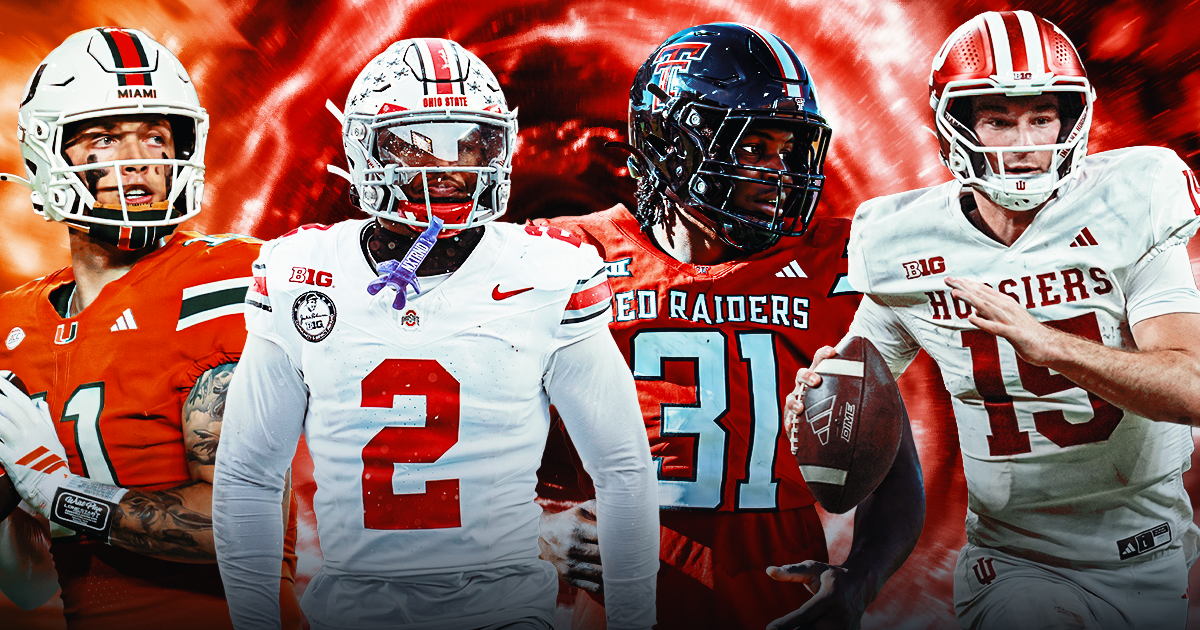
Mario Cristobal learned to build rosters in an era when National Signing Day dictated everything. Who a program signed out of high school, for better or worse, determined the direction of the next three or four seasons. As a first-time head coach at Florida International, Cristobal had to search for hidden gems. Later, as Nick Saban's offensive line coach at Alabama, he learned how to stack blue-chip recruits to create a depth advantage that overwhelmed opponents. He carried that philosophy to Oregon, attempting to build the Ducks the same way Saban built the Crimson Tide. By the time Cristobal returned to his alma mater at Miami in December 2021, roster construction had been completely reshaped. Transfers no longer had to sit out a year, removing a major deterrent to movement. NIL deals were now legal, allowing players to be paid. The old rules were gone, and no one knew exactly how the new system would work. Cristobal responded by developing a strategy built around three types of players. Miami needed to evaluate and recruit experienced transfers nearing the end of their careers, portal players with multiple years remaining, and high school signees capable of developing into stars. "We have a really good blend of portal players that are older who have a year left and portal players that have multiple years," Cristobal said. "And then you have high school signees. You have experience and high-level young talent. As long as the attitudes are right and the level of talent and caliber of work ethic are right, that's a powerful blend." That blend has shown up on the field. Quarterback Carson Beck arrived for a single season after four years at Georgia. Defensive lineman Akeem Mesidor began his career at West Virginia. Safety Zechariah Poyser earned All-Conference USA honors as a freshman at Jacksonville State before stepping directly into Miami's starting lineup. At the same time, the three players an NFL scout would most likely identify as Miami's best prospects, Rueben Bain, Francis Mauigoa, and Malachi Toney, all signed with the Hurricanes out of high school. Miami's approach is not the only way to build a College Football Playoff team. Ohio State relies heavily on high school signees, while other contenders lean more aggressively on the portal. Data from SportSource Analytics published by The Athletic shows Georgia used the portal the least, with just 9.6 percent of its regular-season starts coming from transfers. Ohio State checked in at 27.7 percent, Alabama at 38.1 percent, Oregon at 42.6 percent, and Miami at 53.6 percent. Texas Tech, Indiana, and Ole Miss all hovered near two-thirds. Every number tells a different story. Some programs use the portal to accelerate rebuilds. Others use it to plug holes around elite high school talent. Indiana leaned on continuity, importing players from James Madison and later adding quarterback Fernando Mendoza to sustain momentum. What has become clear is that there is no single blueprint for success. But one truth applies to everyone. To contend in modern college football, staffs must win in the transfer portal. With the portal opening Friday and no second window after spring practice, January has become the sport's version of free agency. Cristobal knows that, regardless of what happens next in the playoff, the quickest way to stay there is simple. Win in the portal. Read the full column from Andy Staples. |
|
|
Below, you'll find 3 facts about a random college football player. You'll try to guess who the player is based on the facts. Let's go. I was a Miami native who starred at a powerhouse high school before staying home and becoming one of the most dominant running backs in college football during the early 2000s.
- I was a key piece of an all-time great national championship team and later helped lead an undefeated regular season, finishing in the top five of the Heisman Trophy voting.
- I set multiple single-season school records at Miami, scored 28 rushing touchdowns in one year, and rushed for over 100 yards in ten games.
Answer at the bottom. |
|
|
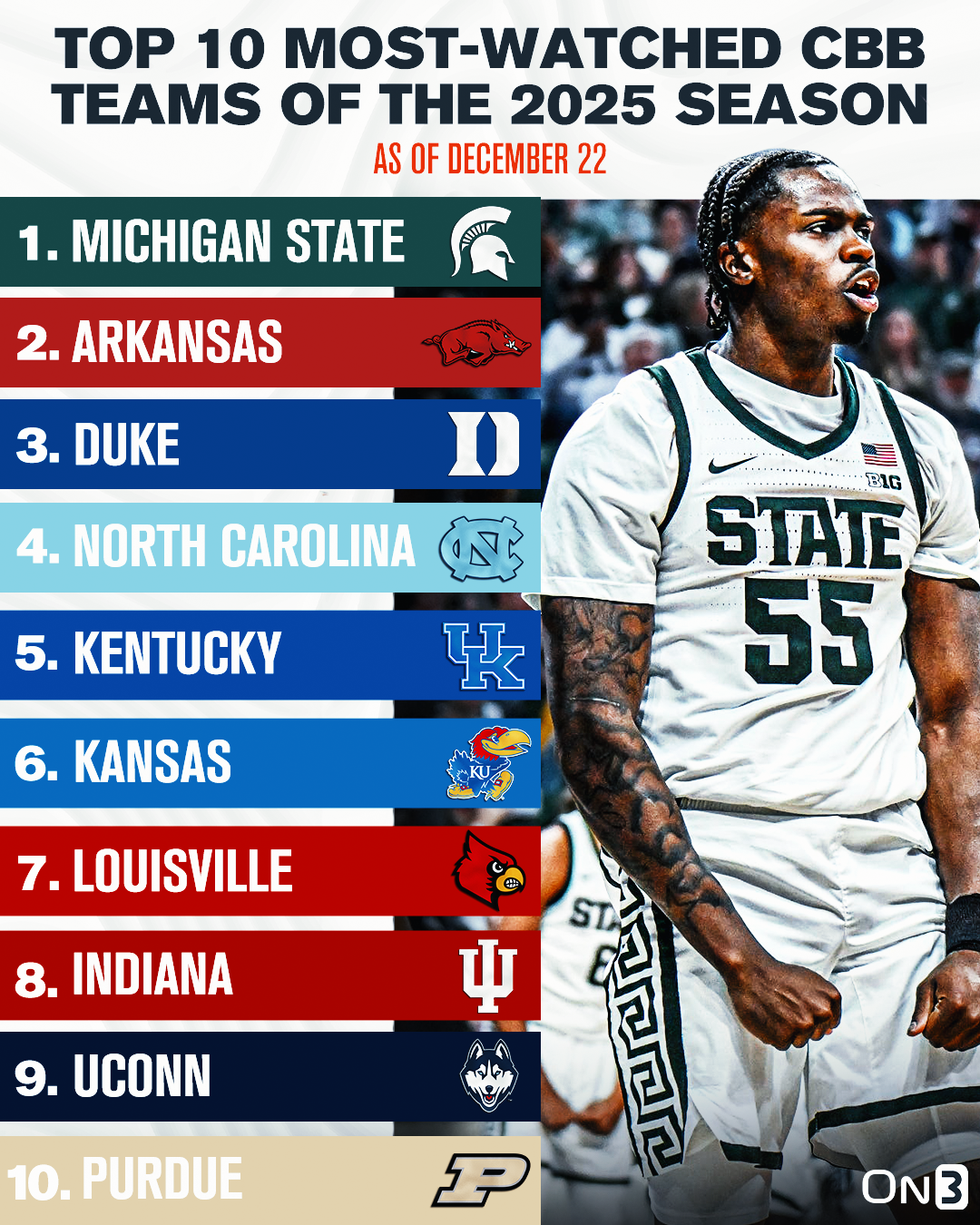
The most-watched men's college basketball teams of the 2025-26 season |
|
|
Join now to unlock the best of college and high school sports from our trusted team of insiders. Join for $1. Cancel anytime. |
|
|
Not subscribed to On3? Subscribe here for all the news and analysis from our network of insiders. |
2970 Foster Creighton Drive, Nashville, TN 37204 |
©2025 On3 Media. All rights reserved. |
|
|
|





No comments:
Post a Comment