Today: Ty Simpson's decision, transfer portal intel, redshirt rule change, and Colorado's harsh reality. |
|
|
 | ~7 minute read (1,720 words) | | |
|
|
Massive NIL overtures from other schools couldn't delay Ty Simpson's NFL dreams |
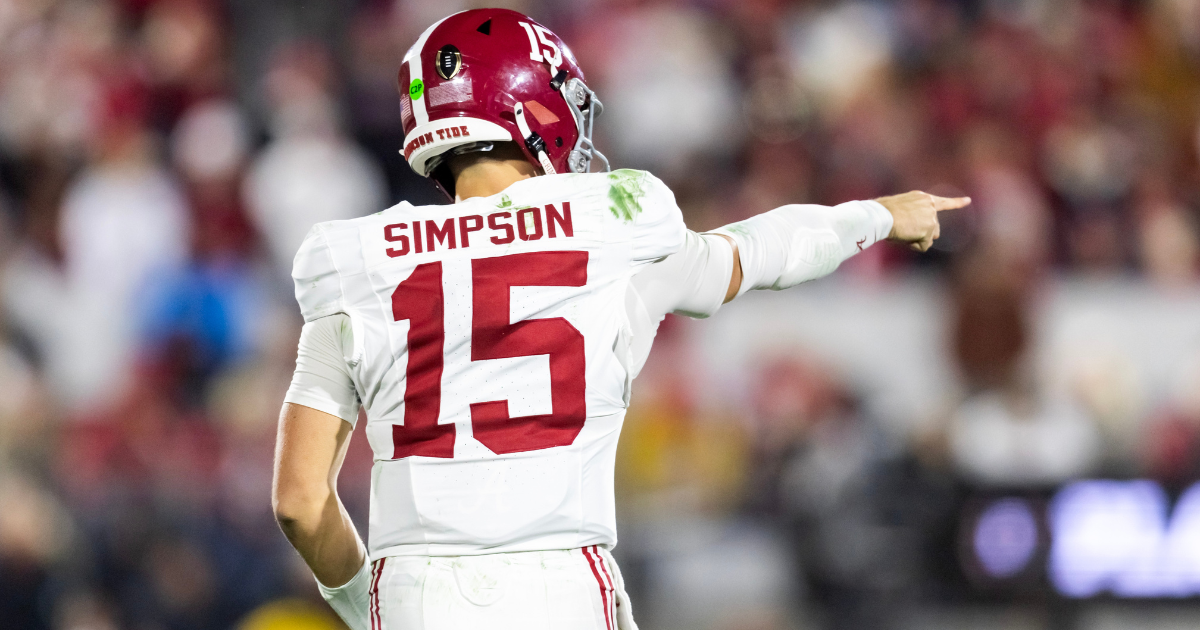
The amounts of money being thrown at Ty Simpson were staggering even by today's NIL standards, but as he wrestled with his future, he kept coming back to advice from his old coach, Nick Saban. "He's always had a way of helping you see things clearly, sort of like your grandfather," Simpson told On3's Chris Low on Tuesday, shortly after officially filing paperwork to enter the NFL draft. In recent days, Simpson admitted his head had been spinning. Should he follow through on his decision to turn pro, which he made last week? Or should he enter the transfer portal, play one more college season elsewhere, and potentially become the highest-paid player in the sport? The offers were pouring into his agent. Miami and Tennessee each offered $4 million. Ole Miss joined around the same number. Tennessee hinted it could go as high as $5 million. Eventually, Miami raised its offer to $6.5 million. "Miami was kind of like, 'All right, we're moving on,' and then they lost out on Sam Leavitt and came back with that big number," Simpson said. "And then Ole Miss called again and said they could match it." Nothing was ever put in writing, but Sunday was overwhelming. Simpson said he planned to go duck hunting after church but couldn't bring himself to go. "I had a knot in my stomach," he said. "I didn't know what to do." As he had before, Simpson turned to prayer and long conversations with his parents, including his father Jason, the head coach at UT Martin. "I really felt good with my decision to go pro, but that amount of money to play college football again for what amounts to about eight months makes you stop and think," Simpson said. "I remember my parents telling me that $6 million was more than they had made the whole time they had been married, but the thing they wanted most for me was to be happy." That reflection brought him back to a conversation with Saban after Alabama's season ended in a 38–3 loss to Indiana in the College Football Playoff. "Take the money out of it," Saban told him. "If everybody was offering you zero dollars, what would you want to do?" From the time he was a kid, Simpson's dream was to play in the NFL. With feedback from NFL personnel projecting him as a solid first-round pick, he knew the money would still be there. His decision was made. On Tuesday morning, Simpson followed up with Alabama coach Kalen DeBoer and offensive coordinator Ryan Grubb to assure them his decision was final. "KD and Coach Grubb have been so good to me," Simpson said. He explained that leaving for one last payday would erase what he had built. "Everybody would just remember me as the guy who took all this money and went to Miami or Tennessee… I was a captain. I put my hand and footprints in the cement at Denny Chimes… I would have lost everything that I built at Alabama." Simpson acknowledged the business realities of modern college football. "It's no different than coaches," he said. "That's life." Though he never made $1 million in a season at Alabama and started for just one of four seasons, Simpson said he was happy with how his career unfolded. "I was happy at Alabama and wanted to stand on what I built there. That's the way I wanted to go out." Despite injuries throughout the season, Simpson received first-round grades from 17 of 18 NFL teams. It's not the way Simpson would have chosen to end his Alabama career, his only season as the starter, but he hopes to be remembered as somebody who loves football and loves Alabama. "And somebody who was loyal," he said. Don't miss the full story from Chris Low. |
|
|
Transfer Portal Intel: Suitors lining up for Jordan Seaton, update on Damon Wilson, and more |
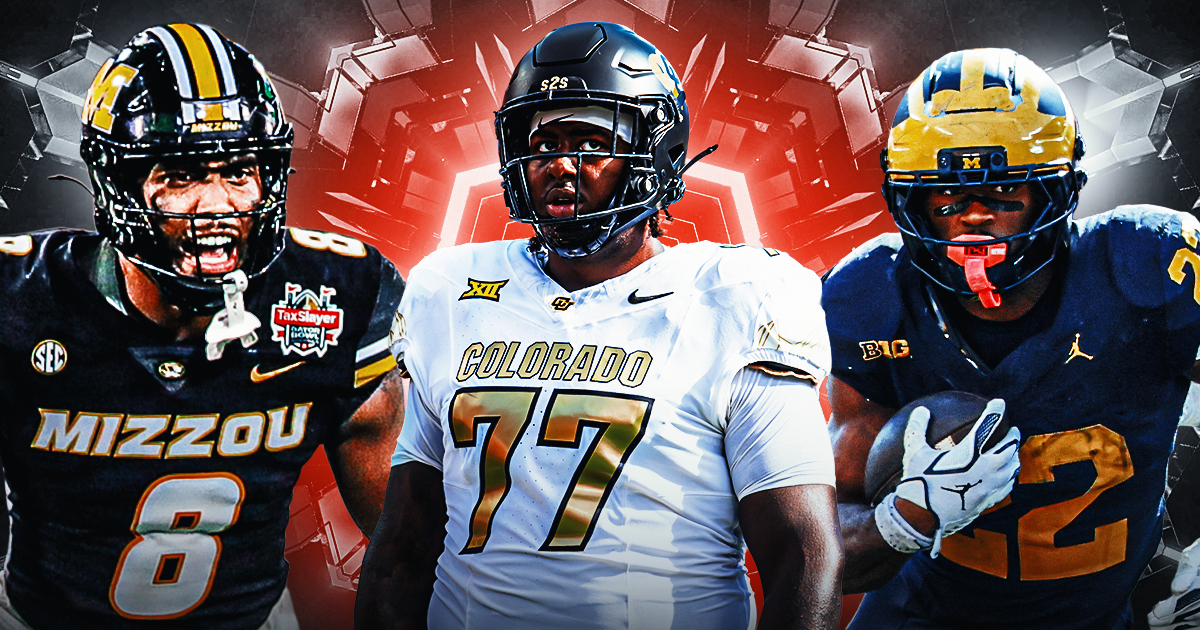
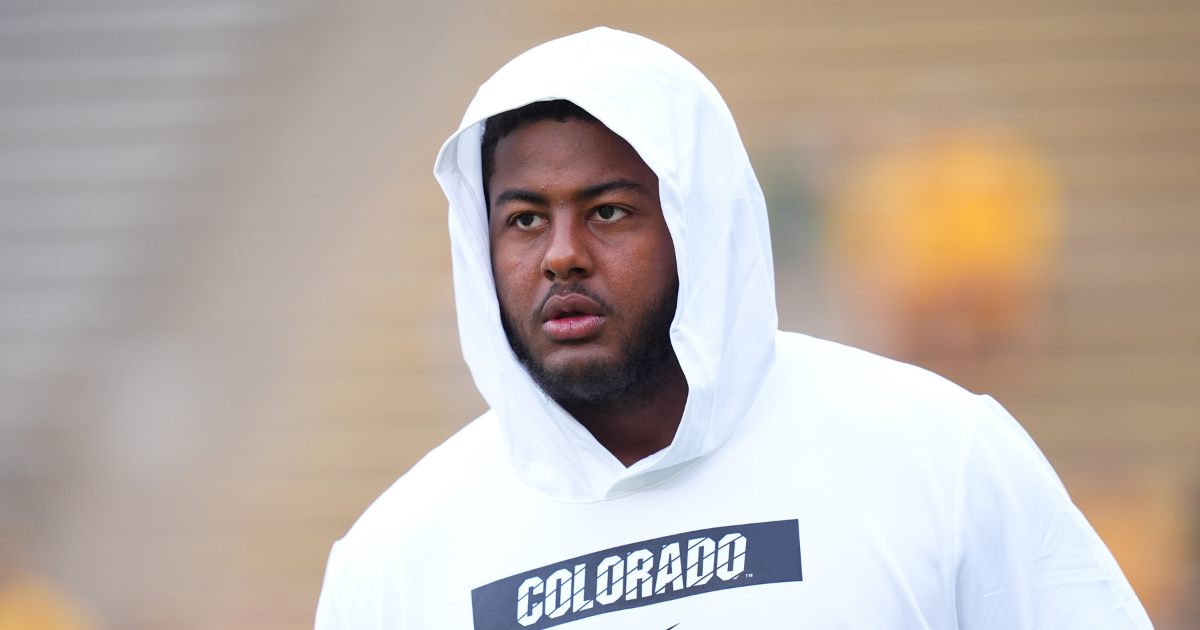
Over 3,700 FBS players have hit the transfer portal in the last 12 days. Most of the top quarterbacks have come off the board to this point, but plenty of impact players are still up for grabs. Arguably none bigger than Colorado offensive tackle Jordan Seaton. Here's the latest transfer portal intel On3 is hearing on the top remaining players available in college football free agency. Colorado OL Jordan Seaton When On3 released its early schools to watch Monday night for the Colorado transfer, Oregon and Texas were mentioned as the top two schools to watch. Speaking with sources on Tuesday morning, Florida is another school worth monitoring. Texas A&M is not expected to be a top contender at this point, but the situation remains fluid. Other programs of note could include LSU, Miami, Ohio State, Ole Miss, and Texas Tech. Seaton has yet to officially enter the transfer portal, but is currently expected to take visits. Missouri EDGE Damon Wilson Following a visit to LSU over the weekend, Missouri transfer EDGE Damon Wilson is back home in Venice, Florida, for the dead period. Wilson could take a visit to Texas Tech in the coming days, and he's scheduled to visit Miami at some point before making a final decision. LSU WR Kyle Parker Auburn is trending to land the LSU transfer wide receiver, sources tell On3. He posted 31 catches for 330 yards and four touchdowns in 2025 and has two years of eligibility remaining. Syracuse WR Darrell Gill The Syracuse transfer has been in decision mode since Sunday and is deciding between Ole Miss and Washington, sources tell On3. The Rebels are trending, but Ohio State is the latest top-25 program to express interest. Kennesaw State WR Christian Moss The NCAA granted the former Kennesaw State wide receiver an additional year of eligibility on Tuesday after he was denied participation opportunities due to a severe hand injury and subsequent roster removal at Virginia Tech in 2023. Among the schools showing interest in the wideout are Kansas, Kansas State, Ohio State, Stanford, Washington, and West Virginia, his reps tell On3. New Mexico State TE Gavin Harris With interest coming in from NC State and SMU, among others, Harris is expected at South Carolina on Thursday, his rep Ian Johnson tells On3. Read Nakos' intel on the top 16 players in the portal. |
|
|
Coaches want to reinvent the redshirt rule, but the threat of lawsuits allows only for a half measure |
A discussion that many expected to center on the college football calendar instead revolved around a far more contentious issue when FBS head coaches met this week in Charlotte: the redshirt rule. James Franklin, speaking Tuesday at the American Football Coaches Association Convention, said the calendar — with its constantly shifting transfer portal, recruiting, and spring practice dates — was not the primary focus of the annual meeting. Instead, coaches zeroed in on the four-game redshirt rule and the problems created by its most recent iteration. The obvious fix, at least in theory, would be allowing players five years to play five seasons rather than the current five-to-play-four structure. Such a change could eliminate the incentive for players to shut themselves down after four games in order to preserve eligibility for another paid season, and it could also simplify a waiver process that has increasingly led to confusion, frustration, and litigation. But that is not what the coaches recommended. AFCA director Craig Bohl announced that coaches voted to push for a rule change allowing players to redshirt after appearing in as many as nine games instead of four. The move prompted skepticism, as shifting the cutoff simply moves the shutdown date rather than removing the incentive altogether. The decision was not driven by stubbornness. Most coaches favor five-for-five and have advocated for it for decades. However, they were advised that such a change could expose schools and the NCAA to significant legal risk. On an individual level, players currently seeking additional eligibility could use a new rule as leverage in court. On a broader scale, former players could file class-action lawsuits claiming they were denied a year of earning potential in the NIL era, potentially involving thousands of athletes and massive financial claims. Coaches themselves lack the authority to change eligibility rules. They can only make recommendations to school leaders, who would ultimately have to weigh the legal risks. At this stage, there appears to be little appetite to do so. The redshirt rule, though, clearly needs reform. When the four-game standard was introduced in 2018, it was designed to replace a confusing system and give teams flexibility to manage injuries while remaining player-friendly. Postseason games were later excluded from the count. At the time, the rule benefited both sides. The landscape changed quickly. Liberalized transfer rules and the arrival of NIL allowed players to leverage the redshirt system in new ways. Players could accept deals, play early in the season, then shut themselves down and enter the portal for another opportunity. One general manager described a case in which a six-figure NIL deal unraveled after the player failed to secure a starting role. The player's agent pushed for a shutdown to preserve eligibility, a request the school rejected while continuing to pay him. Clemson coach Dabo Swinney summed it up simply: a rule created with good intentions now operates in a radically different environment. Without collective bargaining, college sports leaders are left trying to patch modern problems onto rules built for a bygone era. Read the full column from Andy Staples. |
|
|
Jordan Seaton's transfer portal exit reveals the reality for Colorado football |
Editor's note: The following is an excerpt from a longer column from Ari Wasserman. Following former Colorado center Cash Cleveland's decision to enter the transfer portal last spring, offensive tackle Jordan Seaton hit social media to express his displeasure with the transient nature of the new college football world. After starting his career as a walk-on at Colorado, Cleveland joined Texas Tech as part of the Red Raiders' impressive portal haul a year ago. Named a Freshman All-American by On3, Cleveland sought a new opportunity that would be better for him. That situation wasn't in Boulder. At the time, Seaton wrote on X: "sports crazy Now… can't even build a true brotherhood anymore too much I and ME." Here's the thing: Seaton was right a year ago. This sport has become more about the individual than ever before. Everything is about financial gain and the pursuit of the best situation, not joining a roster or sticking through the ups and downs to achieve a goal. As a result, many people have become disenchanted with the sport, realizing that winning on the field, in most cases, correlates with winning bidding wars off the field. It's hard for the average fan to keep up with the rosters year over year. But here we are, less than a year later, and Seaton — a potential first-round NFL Draft pick in 2027 — entered the transfer portal himself. Regardless of how he felt nine months ago about Cleveland's decision, Seaton found himself doing exactly what he once despised. And guess what? Nobody is blaming him. It makes total sense for Seaton to make this move because he'll command a massive NIL payday and likely land on a team entering the 2026 season with hopes of winning the national title. Getting richer and playing on a more nationally relevant roster is a layup. Achieving both of those goals isn't a reality at Colorado. We're entering the fourth year of the Deion Sanders era in Boulder, a tenure that began with so much promise, and attention is dwindling away. Not only were the Buffaloes 3-9 in 2025 after finishing the regular season on a five-game losing streak, but Colorado is now losing the highest-rated prospect Sanders signed out of high school during his time as head coach. It's not just any player. It was the offensive lineman who not only played like a champion but also emerged as one of the program's vocal leaders. He spoke out about putting the program above himself. He wanted to win at a high level, doing it Sanders' way. The truth? Seaton went to Colorado as part of the 2024 recruiting class because he believed in the vision Sanders was pitching. He's leaving because it didn't come true. Read the full story. |
|
|
Below, you'll find 3 facts about a random college football player. You'll try to guess who the player is based on the facts. Let's go. I burst onto the scene as a true freshman at Maryland, finishing top-10 nationally in all-purpose yards per game and ranking second in the ACC despite missing time with injury.
- Across three seasons in College Park, I earned All-ACC and All-Big Ten honors, posted multiple 100-yard receiving games, and led my team in catches, yards, and touchdowns in my final year.
- I turned that explosiveness into an NFL career as one of the league's premier wide receivers, stacking Pro Bowls and becoming known as an elite deep threat.
Answer at the bottom. |
|
|
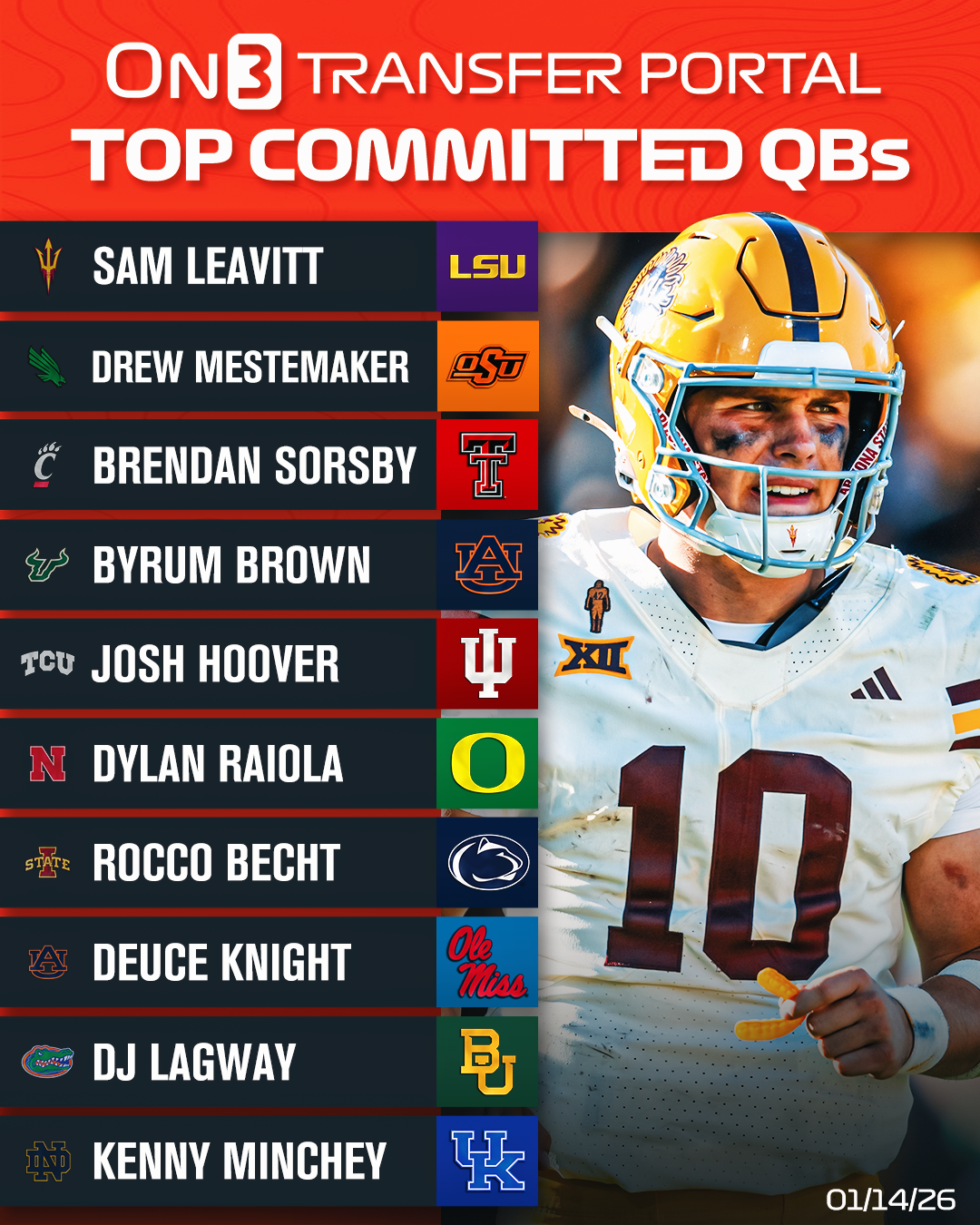
The top committed QBs in the transfer portal |
|
|
Join now to unlock the best of college and high school sports from our trusted team of insiders. Join for 50% off. Cancel anytime. |
|
|
Not subscribed to On3? Subscribe here for all the news and analysis from our network of insiders. |
2970 Foster Creighton Drive, Nashville, TN 37204 |
©2026 On3 Media. All rights reserved. |
|
|
|






No comments:
Post a Comment