Today: Miami-Indiana preview, how Miami nearly flipped Fernando Mendoza, Malachi Toney's impact, and a closer look at the Army-Navy executive order. |
|
|
 | ~8.5 minute read (2,024 words) | | |
|
|
Who has advantage in Indiana vs. Miami national title game? |
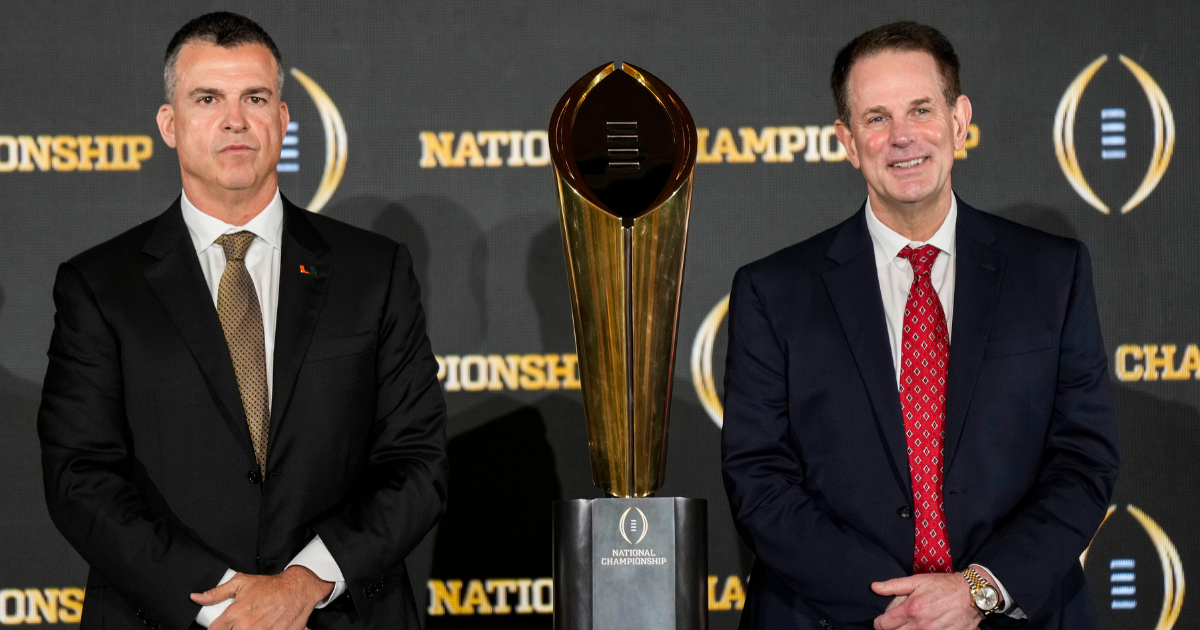
MIAMI GARDENS — In case there was any lingering doubt about how Curt Cignetti views his Indiana team, the Hoosiers coach cleared it up the day before the national championship. "You don't go to war with warm milk and cookies," Cignetti said. Tonight's matchup at Hard Rock Stadium will decide a lot more than metaphors. Indiana is chasing its first national championship. Miami is trying to win its first title since 2001 and its sixth overall. History favors the favorite. The last six national championships have been won by the betting favorite, all by an average margin of 25 points. That bodes well for Indiana, which enters at 15-0 and is favored by 8.5 points. Miami, at 13-2, is trying to become one of the biggest underdogs to win a national title in the modern era. After watching Indiana dominate Alabama in the Rose Bowl quarterfinal and Miami knock off Ole Miss in the Fiesta Bowl semifinal, the matchup hinges on a few clear areas. Indiana's biggest edge is its run game against Miami's defense. Led by RB Roman Hemby, the Hoosiers own the Big Ten's top rushing offense and rank among the nation's best. Indiana also ranks first nationally in finishing drives and fourth in rushing success, according to Pro Football Focus. "For us, we've got to stop the run," Miami defensive coordinator Corey Hetherman said, noting Indiana's ability to stay ahead of the chains and keep the pocket clean. If Miami cannot slow the run early, Indiana's offense becomes difficult to contain. Stopping the run also opens the door to Indiana quarterback Fernando Mendoza, the Heisman Trophy winner who has been nearly flawless in the playoff. Mendoza has eight touchdown passes with just five incompletions across Indiana's postseason run. "There's a reason why he won the Heisman," Hetherman said. "He's an unbelievable football player." Miami's task gets tougher with starting defensive back Xavier Lucas suspended for the first half due to a controversial targeting call. Indiana offensive coordinator Mike Shanahan acknowledged the Hoosiers will be watching Miami's rotations closely, especially in the secondary. Still, Miami is not short on confidence. Hetherman said his defense will not flinch, even against Indiana's deep group of playmakers. Turnovers could be decisive. Indiana leads the nation in turnover margin at plus-21, while Miami ranks 12th at plus-11. But Miami has struggled with tackling and red-zone defense, allowing touchdowns on more than half of opponents' red-zone trips. On the other side, Indiana's defense faces a Miami offense led by quarterback Carson Beck, running back Mark Fletcher and dynamic freshman receiver Malachi Toney. Beck has evolved into a more disciplined quarterback, using his legs when needed and protecting the football. "He's very much a point guard of this offense," Indiana defensive coordinator Bryant Haines said. Toney, Beck's favorite playoff target, presents a unique challenge. Haines called him the best slot receiver Indiana has seen, praising his speed, physicality and maturity beyond his years. Indiana's defense enters ranked among the nation's best against the run, in tackling, coverage, and takeaways. That unit will be tested tonight, but the formula is clear. This is not about cookies. It is about control, discipline and execution. And one team will leave Miami with a national championship. Read the full breakdown from Brett McMurphy. |
|
|
How Miami 'pushed hard' to flip Fernando Mendoza from Indiana in transfer portal |
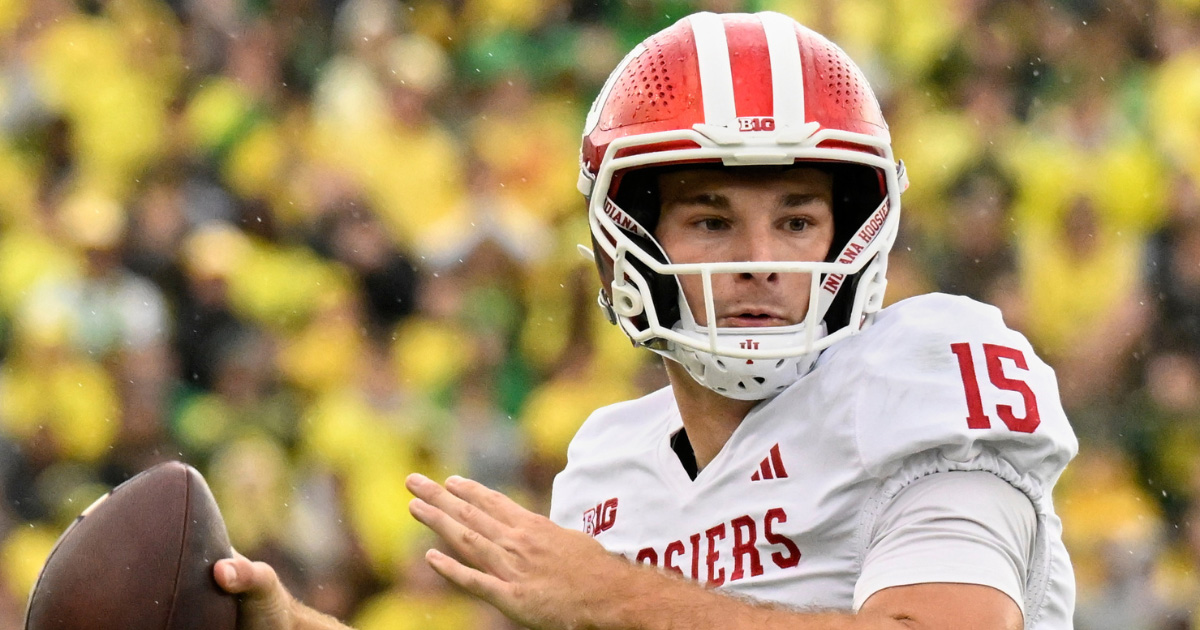
Twelve months ago, Fernando Mendoza was staring at a transfer decision that would define his career. On Monday night, the impact of that choice will be on full display in the national championship game. On Christmas Eve 2024, Mendoza verbally committed to Indiana, choosing Curt Cignetti's program after drawing significant interest from Georgia. The opportunity to elevate a rising Hoosiers program and play alongside his younger brother, Alberto, made Bloomington appealing. But the process was not smooth. For nearly a week, Mendoza's paperwork with Indiana was not finalized, creating an opening. During that window, Miami and head coach Mario Cristobal made a late, aggressive push to flip the Cal transfer quarterback, sources told On3. Miami was also involved with Darian Mensah and John Mateer in the portal, but for a stretch, the Hurricanes went all-in on Mendoza. "They came in late, they pushed hard for sure," Alberto Mendoza said. "Ultimately Indiana won because they were consistent throughout the process. We thought the best thing for him was Indiana." Cristobal's interest lingered. Mendoza grew up a Miami fan and attended Christopher Columbus High School just miles from campus. Cristobal repeatedly called, attempting to sway the quarterback before Indiana's paperwork was finalized. Ten days later, the situation shifted. On Jan. 10, 2025, former Georgia quarterback Carson Beck announced he would enter the transfer portal. Beck quickly became Miami's top target, but until that point, the Hurricanes continued pushing for Mendoza. Indiana's staff was aware of the pursuit. "We knew about it," offensive coordinator Mike Shanahan told On3. "There were a lot of suitors out there. Recruiting is never over until he signs that document. We were fortunate he chose Indiana." Alberto Mendoza said the brothers sat down and evaluated every option carefully. While playing together mattered, Fernando ultimately made the decision on his own. "I let him make his own decision," Alberto said. "The Lord had a plan, and it worked out." The results have been undeniable. In his lone season at Indiana, Mendoza won the Heisman Trophy and led the Hoosiers through dominant College Football Playoff wins over Alabama and Oregon. He has been historically efficient, throwing more touchdown passes than incompletions in the CFP. Shanahan said Mendoza's Cal film stood out immediately, but his response to adversity sealed his belief. Trailing on the road at Penn State, Mendoza engineered a game-winning drive. In the Big Ten title game, he bounced up after a massive hit on the opening play and led Indiana to its first conference championship since 1967. On Monday night, Mendoza and Beck will meet with a national title on the line, each representing different paths to redemption and success. None of it happens if Mendoza wavers. "They pushed late, very late," Alberto Mendoza said. In college football, especially in the portal, timing and conviction matter. Fernando Mendoza had both. Read the full story from Pete Nakos. |
|
|
Malachi Toney bought into Mario Cristobal's vision for Miami and helped make it real |
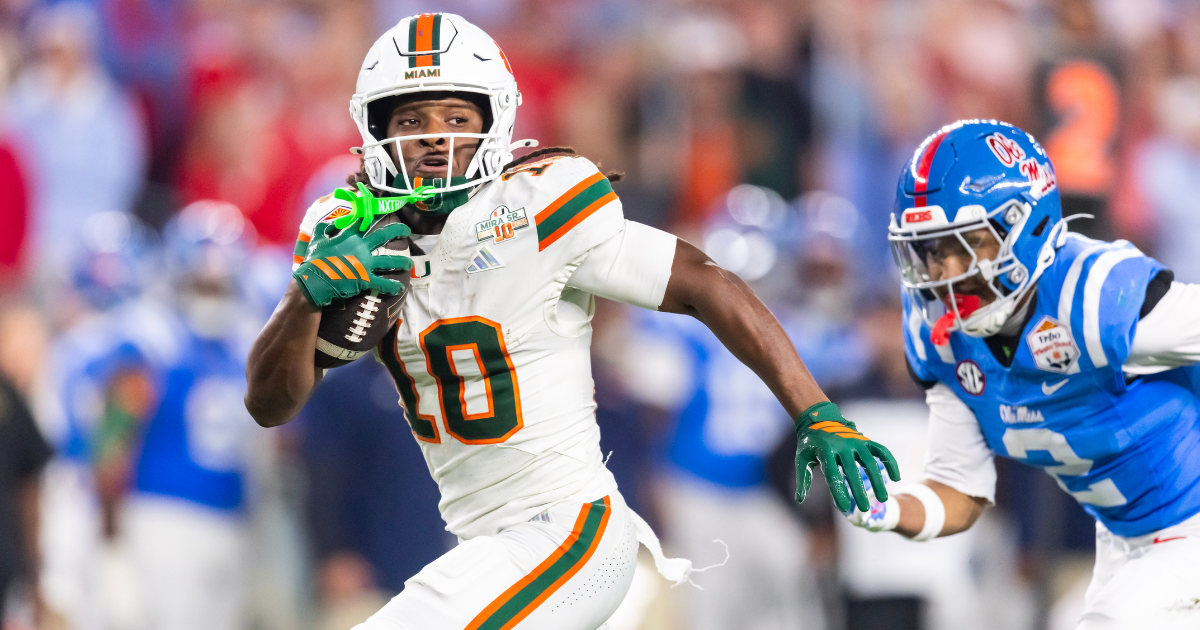
MIAMI BEACH, Fla. — For the first half of Miami's hour-long media day at the Miami Beach Convention Center, "Baby Jesus" didn't have his own podium. Instead, he blended in with the rest of the Hurricanes, sitting quietly on the aluminum bleachers. Miami was wearing white jumpsuits without numbers, so you would think Malachi Toney's smaller stature might help him fade into the background. It didn't. The true freshman receiver was quickly surrounded by reporters, microphones stacked in front of him as they tried to learn more about the unlikely breakout star who helped push Miami to the national title game. The questions came one after another. How did he adjust so quickly? How did he carve out such a big role so early? How did he do it while playing behind veterans like CJ Daniels and Keelan Marion? Toney answered calmly and briefly, never volunteering more than necessary. Then came the nickname. Where did "Baby Jesus" come from? "I was given that nickname by somebody on Facebook when I was eight years old," Toney said. Playing football? "Yeah ... At Washington Park. I was playing quarterback." Do you like it? "I don't feed into it." It's easy to understand why Toney doesn't lean into the nickname, especially given how it can land with some people. But when you watch him play, you also understand why it stuck. He is not loud or flashy. He just attacks the game. One screen pass, one crease, and he is gone. Some players announce themselves slowly. Others make it obvious almost immediately. In Toney's case, people noticed when he was eight years old. In college football, it happened during the first half of his true freshman season at a program desperate to return to national relevance. That is why it matters that he is a Hurricane. A few weeks ago at the Cotton Bowl, former five-star receiver Jeremiah Smith was asked whether he would have stayed home and signed with Miami had the program already shown this level of upside. The Ohio State star did not hesitate. "Most likely, yeah," Smith said. Toney was not a five-star. He was a three-star recruit, ranked No. 420 overall and No. 61 at receiver in the Rivals Industry rankings. Still, he had plenty of chances to leave. His offer list included Florida State, Ohio State, Alabama, Georgia, Texas A&M, Tennessee, Penn State, and Oklahoma. He even decommitted from Miami late in his recruitment after visiting Alabama. It felt like the Hurricanes were about to lose another South Florida talent. Instead, Toney signed and bought into Mario Cristobal's vision. "What made me stay home is me trusting the process," Toney said. "Trusting what Coach Cristobal was telling me he was going to make happen with this program." The results speak loudly. Toney has 99 catches for 1,089 yards and nine touchdowns, plus scores as a runner and passer. He turns nothing into something. He could have been elsewhere. Instead, he is at Miami, playing for a national championship against Indiana on Monday night, and the Hurricanes are grateful that Baby Jesus is on their sideline. Read the full story from Ari Wasserman. |
|
|
Donald Trump's Army-Navy executive order was aimed at College Football Playoff negotiations |
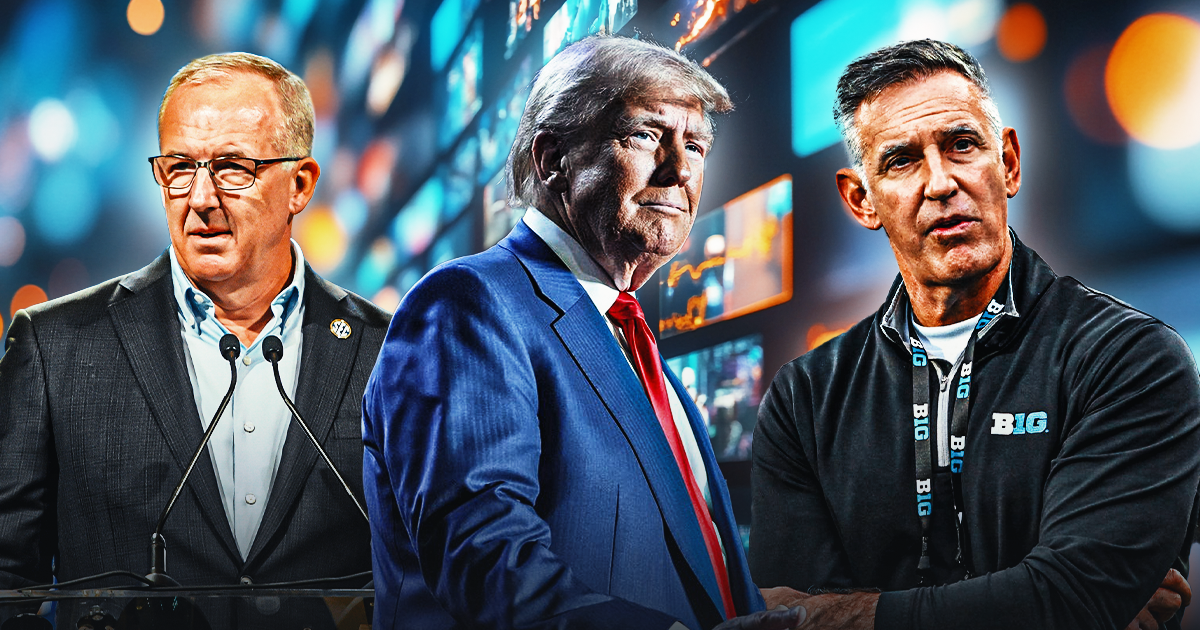
Why did President Donald Trump issue an executive order Saturday to preserve the Army-Navy game's traditional time slot? The timing wasn't random. It was a strategic move aimed squarely at the College Football Playoff's ongoing negotiations over expansion and scheduling. Trump announced the order Saturday, one day before the CFP board of managers convened to discuss the playoff format for 2026 and beyond. Several of the models on the table would push CFP games earlier into December, threatening to displace the Army-Navy game from its longstanding mid-afternoon slot on the second Saturday of the month. That conflict is not theoretical. A 24-team playoff, the model favored by the Big Ten, almost certainly would create overlap. Even some 16-team options could do the same, including one that places first-round games on the same Saturday traditionally reserved for Army-Navy and the Heisman Trophy ceremony. That timing is why Trump's involvement matters. While the American Athletic Conference does not wield the same power in CFP meetings as the Big Ten or SEC, it is the home league for both Army and Navy. That gives the AAC access to a uniquely influential ally. In his post on Truth Social, Trump framed the issue in stark terms, writing that the Army-Navy game was at risk of being pushed aside by playoff games and television money and declaring that "the second Saturday in December belongs to Army-Navy, and ONLY Army-Navy." The executive order, while not a law, signals that the White House is willing to step into the CFP's orbit at a time when conferences are actively lobbying Congress for federal protections tied to antitrust and NIL issues. The Army-Navy game is not a niche product. It has averaged roughly 7.5 million viewers in recent years and peaked at 9.4 million in 2024. CBS, the schools, and the AAC all want to preserve the game's standalone window, and the executive order strengthens their position inside CFP negotiations. According to On3's Chris Low, those negotiations remain unsettled, and the stalemate remains. The Big Ten continues to push for a 24-team playoff, while the SEC, the other eight conferences, and Notre Dame all favor a 16-team format. If no agreement is reached by the Jan. 23 deadline, the CFP will remain at 12 teams for the 2026 season. As commissioners left Sunday's meeting in Miami Beach, optimism was limited. Officials stressed that discussions were ongoing, but there is no guarantee of expansion in the near term. Against that backdrop, Trump's order serves as both a warning and a reminder. The CFP's format debate is no longer confined to conference rooms and television contracts. It now intersects with tradition, politics, and federal power, all tied to one December Saturday that may end up shaping the playoff's future. Read the full story from Andy Staples. |
|
|
Below, you'll find 3 facts about a random college football player. You'll try to guess who the player is based on the facts. Let's go. I was the first player to ever reclassify in HS, and spent years waiting at USC behind two Heisman Trophy winners, staying put through injuries and transfer rumors until I finally earned the starting job.
- As the starter, I led one of college football's most dominant teams, earned first-team All-Pac-10 honors, and was viewed as one of the top quarterbacks in the country.
- I finished my career 9-0 against top-25 teams, won two Rose Bowls, set a Rose Bowl record with seven career touchdown passes, and was named Offensive MVP in my final game.
Answer at the bottom. |
|
|
The On3 | Rivals Transfer Portal sale is still open! |
|
|
Join now to unlock the best of college and high school sports from our trusted team of insiders. Join for 50% off. Cancel anytime. |
|
|
Not subscribed to On3? Subscribe here for all the news and analysis from our network of insiders. |
2970 Foster Creighton Drive, Nashville, TN 37204 |
©2026 On3 Media. All rights reserved. |
|
|
|






No comments:
Post a Comment